
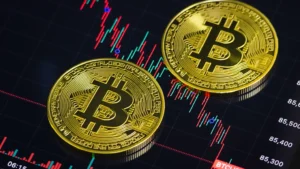
Bitcoin drops 15%, briefly breaking below $61,000 as sell-off intensifies, doubts about crypto grow
Bitcoin briefly sank below $61,000 on Thursday evening as investor confidence continued to falter in the asset once hailed as “digital gold” and a unique store of value.
At one point, the token slid to $60,062.00, as the crypto sell-off intensified in overnight trading. Bitcoin was last down about 15% at 7:37 p.m. ET, trading at $62,448.00.
Digital assets, including bitcoin, have fallen deeper into the red as investors re-assess the practical utility of a token that has been championed not only as a hedge against inflation and macroeconomic uncertainties but also as an alternative to fiat currencies and traditional safe-havens such as gold.
That hasn’t panned out lately, since bitcoin peaked just north of $126,000 in early October.
The cryptocurrency broke below the key level of $70,000 earlier in the session Thursday and then the selling increased, bringing the asset closer in line with its pre-election level. The cryptocurrency is down almost 30% this week alone.
“Bitcoin”. Just the name conjures images of digital gold, financial revolution, and headlines about soaring prices and dramatic crashes. Since its inception in 2009, Bitcoin has captivated investors, technologists, governments and everyday people alike. But to truly grasp Bitcoin and its price today, we must go beyond the numbers and explore the story, mechanics, market forces, and the broader implications of this groundbreaking digital asset.
In this article, we’ll cover:
-
What Bitcoin Is
-
How Bitcoin Prices Are Determined
-
Factors Driving Bitcoin’s Price Today
-
The Current State of Bitcoin Markets
-
Historical Price Milestones
-
Why Bitcoin Is So Volatile
-
Bitcoin’s Place in the Global Financial System
-
Long-Term Perspectives on Bitcoin
-
Risks and Criticisms
-
Conclusion: What Bitcoin Means in 2026
Bitcoin and Bitcoin Prices Today: Understanding the World’s First Cryptocurrency
1. What Bitcoin Is
Bitcoin (BTC) is the first and most widely recognized cryptocurrency. It was introduced in 2009 by an anonymous developer (or group) using the pseudonym Satoshi Nakamoto. The core idea was simple but revolutionary: a decentralized digital currency that can be transferred directly between individuals without the need for banks or other intermediaries.
At its foundation, Bitcoin runs on a technology called blockchain — a distributed ledger that records every transaction across a network of computers. This decentralization ensures that no single authority controls Bitcoin, and the system is transparent and tamper-resistant.
Bitcoin’s supply is also fixed by design: only 21 million bitcoins will ever exist. This scarcity is one of the key reasons many compare Bitcoin to digital gold.
2. How Bitcoin Prices Are Determined
Unlike traditional currencies controlled by governments and central banks, Bitcoin’s price is set entirely by market forces — the balance of buying and selling on exchanges across the world.
Here’s how it works:
-
Order Books: When buyers place bids to buy Bitcoin at a certain price and sellers place asks to sell at certain prices, the exchange matches these orders. The most recent transaction becomes the “current price.”
-
Global Market: Bitcoin trades 24/7 on dozens of exchanges globally. There isn’t a single official price; instead, there’s a global consensus based on aggregated exchange data.
-
Supply and Demand: Prices rise when demand for Bitcoin exceeds supply at current price levels, and fall when sellers outnumber buyers.
This market-driven pricing explains why Bitcoin can be extremely volatile — prices shift rapidly with changes in sentiment, news, regulation, and broader financial conditions.
Read Also: Behind Bars: Binance’s Gambaryan Seeks Justice in Nigeria
3. Factors Driving Bitcoin’s Price Today
Understanding Bitcoin’s price requires a look at several key drivers:
a. Supply and Scarcity
Bitcoin’s maximum supply is capped at 21 million coins. This scarcity is fundamental to its value proposition. Unlike fiat money, which can be printed endlessly by central banks, Bitcoin’s supply is predictable and finite.
Every four years, Bitcoin undergoes a “halving” event — the reward given to miners for adding new blocks to the blockchain is cut in half. This reduces the rate at which new bitcoins enter circulation, tightening supply. Halving has historically been followed by periods of price appreciation.
b. Demand and Adoption
As more people, companies, and institutions adopt Bitcoin, demand tends to push prices higher. This includes:
-
Retail investors buying Bitcoin as an investment or savings vehicle.
-
Institutions such as hedge funds, asset managers, and corporations allocating capital to Bitcoin.
-
Payment adoption, where companies begin accepting Bitcoin as a medium of exchange.
-
Financial products like Bitcoin exchange-traded funds (ETFs), which allow traditional investors exposure to BTC without needing to manage the asset directly.
c. Macro and Market Sentiment
Bitcoin is often seen as a “risk-on” asset, meaning its price tends to rise when investors are confident and fall when risk sentiment drops. Factors that influence this include:
-
Interest rate decisions by central banks.
-
Inflation data and economic growth indicators.
-
Stock market performance, since some investors treat Bitcoin like a speculative asset correlated with equities.
d. Regulation and Government Policy
Regulatory developments around the world play a huge role. Clear supportive regulation (like approval of Bitcoin ETFs or legal frameworks) tends to boost prices. In contrast, crackdowns or threats of restrictive legislation can lead to sell-offs and price declines.
e. Institutional Interest and Whale Activity
Large holders of Bitcoin, known as “whales,” can influence price through large transfers or trades. Similarly, institutions announcing Bitcoin purchases can trigger waves of buying pressure.
4. The Current State of Bitcoin Markets (2026)
As of February 2026, Bitcoin is navigating a highly volatile market environment.
According to live market data, Bitcoin’s price is fluctuating around ~$65,854 USD.
External price trackers show live prices consistent with this overall trend — Bitcoin trading in the mid-$60,000 range on major cryptocurrency data sites.
It’s important to note that price can vary slightly depending on which exchange you check, as different markets around the world reflect micro differences in local order books.
Recent news reports paint a picture of a downward price movement compared with historic peaks:
-
Bitcoin has dropped below key psychological levels like $70,000 and even $65,000 — its lowest in many months — reflecting increased market uncertainty.
-
The fall has been attributed to broader risk-off sentiment in global markets and concerns about looming regulation.
-
Despite the recent sell-off, Bitcoin briefly rebounded from lower levels as traders responded to macroeconomic data.
This ongoing volatility illustrates how dynamic Bitcoin markets are: prices can swing tens of thousands of dollars in short periods.
Read Also: I Subscribe my GOtv and is not working
5. Historical Price Milestones
Bitcoin has experienced some of the most dramatic price movements in financial history:
🚀 All-Time Highs
In October 2025, Bitcoin reached record highs above $125,000 — surging on a wave of institutional demand, ETF inflows and macro uncertainty.
This marked a watershed moment for Bitcoin, confirming its place as a mainstream financial asset in many investors’ eyes.
📉 Sharp Corrections
However, Bitcoin is no stranger to corrections. After its all-time highs, the market experienced significant pullbacks as traders took profit and risk sentiment shifted.
These swings — both up and down — are characteristic of Bitcoin’s market cycles.
6. Why Bitcoin Is So Volatile
Bitcoin’s volatility — frequent and steep price swings — comes from a few core features:
a. Relatively Young Market
Compared to traditional assets like stocks or gold, Bitcoin’s market is still young and less liquid. Smaller markets are more prone to rapid price changes.
b. Speculative Trading
A large portion of Bitcoin trading comes from speculation — traders betting on short-term price moves. This behavior amplifies volatility.
c. Sensitivity to News
Bitcoin reacts strongly to headlines — regulatory announcements, economic data, political moves, or endorsements from influential figures can trigger market movements.
d. Correlation with Other Markets
Bitcoin sometimes moves in correlation with equity markets or interest rate expectations, especially during periods of global financial stress.
7. Bitcoin’s Place in the Global Financial System
Bitcoin started as an experiment: a way to transfer value without central banks or intermediaries. Today, it has evolved into something far bigger — a speculative asset, a store of value for some, and a hedge against inflation for others.
Major financial institutions now offer Bitcoin exposure through ETFs, futures markets, and custodial services. Some corporations hold Bitcoin on their balance sheets. Retail platforms allow everyday investors to buy Bitcoin with just a few clicks.
Yet, Bitcoin still exists in a challenging regulatory environment. Some governments embrace it; others restrict or discourage its use. How global policymakers treat Bitcoin remains one of the biggest determinants of its long-term price trajectory.
8. Long-Term Perspectives on Bitcoin
Despite short-term volatility, many long-term analysts and investors remain optimistic:
-
Scarcity: With a fixed supply and a dwindling issuance rate due to halvings, scarcity creates upward price pressure if demand continues to grow.
-
Growing Adoption: As infrastructure improves and more institutions and individuals adopt Bitcoin, its utility and value proposition strengthen.
-
Store-of-Value Narrative: Some compare Bitcoin to “digital gold” — a hedge against fiat currency depreciation and macro instability.
However, not everyone agrees. Critics argue Bitcoin lacks intrinsic value, points to its volatility and environmental concerns, and warn that it may remain speculative rather than fundamental to global finance.
9. Risks and Criticisms
No discussion of Bitcoin is complete without acknowledging its challenges:
a. Regulatory Uncertainty
Governments around the world are still crafting rules for cryptocurrencies. Stricter regulations could dampen demand or restrict access.
b. Environmental Concerns
Bitcoin mining consumes significant energy resources. Although more mining is moving toward renewable sources, energy use remains a point of concern.
c. Volatility and Risk
High volatility means potential for big gains — and big losses. Investors should understand the risks and consider their risk tolerance before entering the market.
d. Competition from Other Technologies
Newer blockchain platforms with advanced features may challenge Bitcoin’s dominance, although no direct competitor has unseated BTC so far.
Read Also: Apple inteligence
10. Conclusion: What Bitcoin Means in 2026
Today, Bitcoin sits at a fascinating crossroads:
-
Its price has retreated from all-time highs, reflecting macro uncertainty and shifting sentiment.
-
Adoption and institutional interest remain significant.
-
Volatility continues to define the market.
-
The narrative around Bitcoin continues to evolve — from revolutionary digital currency to established financial asset class.
For investors and enthusiasts, Bitcoin represents opportunity — but with it comes complexity and risk. Understanding the forces that drive Bitcoin’s price — from market mechanics to global economic shifts — is essential for anyone looking to navigate this exciting digital frontier.